Source Gasoline Movable Pipe Cleaning Machine for Sewer, Industrial, Commercial
Compare 30 listings of the gasoline movable pipe cleaning machine designed for sewer, industrial, and commercial applications. Buyers can evaluate specifications like 180bar pressure, 50L/min flow, and 24HP gasoline engines to find suitable units for pipe cleaning tasks.
Key considerations
Products List


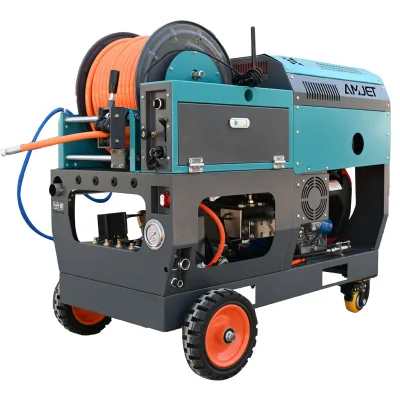


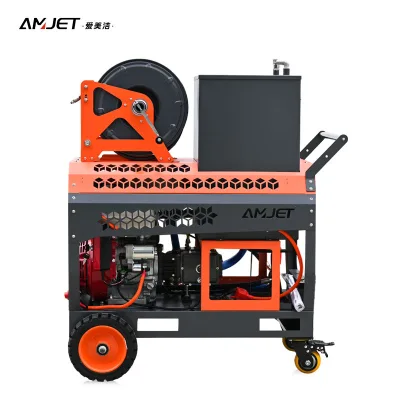


$1000.00 - $20000.00
Moq: 1


Comprehensive Sourcing Guide
Strategic Sourcing Guide for Gasoline Movable Pipe Cleaning Machines
Understanding Core Technical Specifications and Variability
When sourcing a gasoline movable pipe cleaning machine, buyers must first navigate the complex landscape of technical specifications, as observed data reveals significant variability across available units. The core keyword implies a machine powered by a gasoline engine, yet the supply market presents options ranging from gasoline to diesel and electric motor drives. For a strict adherence to the "gasoline" requirement, procurement teams should verify the specific engine type listed in the product data. Observed listings indicate a common configuration featuring a 24HP gasoline engine, which serves as a baseline for high-pressure applications. However, other entries suggest a 25HP diesel engine or a 15kW electric motor, highlighting the necessity of filtering results to ensure the power source matches the operational constraint.
The pressure and flow rates are critical determinants of the machine's capability. Data points show a specific model, GY-50/180, operating at a rate pressure of 180 bar with a water flow of 50 liters per minute. In contrast, other observed units list a working pressure range of 150-300 kg (approximately 150-300 bar) and a working flow rate between 40-80 liters per minute. This variance suggests that "180 bar" is a specific attribute of certain models rather than a universal standard for all gasoline units. Buyers must explicitly request the injection pressure and working pressure specifications for the exact model under consideration. The GY-50/180 model also specifies a high-pressure hose length of 80 meters, while other configurations list 50 meters or even 100 meters. The pipe cleaning diameter capability is another crucial variable, with observed ranges spanning from 50mm to 400mm. A machine capable of cleaning a 50mm sewer pipe may not be suitable for larger municipal lines, making the "Pipe Cleaning Diam" attribute a primary filter for selection.
Furthermore, the physical dimensions and weight of the unit impact its "movable" classification. While the product is described as "Movable," the weight varies significantly, with observations of 180 kg and 160 kg. The physical footprint also differs, with standard sizes listed as 1000600900mm, 1000700950mm, and 11006001050mm. These dimensions dictate the logistics requirements for transport and the space needed on-site for operation. The nozzle type is consistently observed as a "Round Water Column Nozzle," which is essential for the specific application of sewer tube cleaning. The hose reel mechanism is another operational detail, with manual operation being the observed standard, though buyers should confirm if automatic or motorized reels are available for specific high-volume needs.
Compliance, Certification, and Regulatory Verification
In the B2B procurement of industrial cleaning equipment, compliance with international standards and certifications is non-negotiable for risk management and market access. The supplied data indicates that certain models carry CE and CB certifications, while others list only CE. The presence of these marks suggests adherence to European safety and electromagnetic compatibility directives, which is a common baseline for machinery exported from China. However, the data does not confirm a universal certification status for all gasoline pipe cleaning machines. Buyers must treat these certifications as attributes of specific listings rather than guaranteed features of the entire product category.
Verification of the "prod_standard" is equally critical. The observed data lists standard dimensions (e.g., 1000600900mm) under the label "prod_standard," which may refer to the machine's physical size rather than a regulatory standard like ISO or ANSI. Buyers should not assume that a listed dimension equates to a safety or performance standard. Instead, procurement teams must request documentation proving compliance with relevant international safety standards for high-pressure equipment, such as ISO 12100 for safety of machinery. The "prod_packing" is consistently noted as a "Wooden Case" or "Wooden Packing," which is a logistical standard for export but does not imply a product quality standard.
When evaluating suppliers, buyers should demand a valid certificate of conformity that matches the specific model number, such as GY-50/180 or MSCM. The data shows multiple model numbers (GY-50/180, GYB-1, MSCM, RWQX11), indicating that certification is model-specific. A supplier claiming CE certification for a 25HP diesel engine model may not have the same certification for a 24HP gasoline model. Therefore, the verification process must be granular. Buyers should also check for local regulatory requirements in their destination country, as CE certification alone may not satisfy all import regulations. The absence of a specific certification in the provided data for some models necessitates a direct inquiry to the supplier to confirm the status before finalizing any purchase order.
Cost Drivers and Pricing Structure Analysis
The pricing structure for gasoline movable pipe cleaning machines is influenced by a combination of technical specifications, packaging, and supply chain factors. The observed price range is exceptionally broad, spanning from 115 USD to 100,000 USD. This vast disparity indicates that the market includes both entry-level, small-scale units and heavy-duty, industrial-grade systems. The lower end of the range likely corresponds to basic models with lower pressure ratings, smaller engines, or minimal accessories. Conversely, the upper end of the range suggests comprehensive systems with high-pressure capabilities, extended hose lengths, advanced control systems, or specialized configurations.
Several specific factors drive these costs. The engine type and power are primary cost drivers; a 24HP gasoline engine will have a different cost structure compared to a 25HP diesel engine or a 15kW electric motor. The length of the high-pressure hose is another significant variable, with options ranging from 50 meters to 100 meters. A 100-meter hose system will inherently cost more than a 50-meter setup due to the material and manufacturing complexity. The pipe cleaning diameter capability also affects pricing; machines capable of handling the full 50-400mm range may be priced higher than those limited to smaller diameters.
Packaging and shipping logistics further influence the final landed cost. The standard "Wooden Case Packing" is observed across multiple listings, which adds to the weight and volume of the shipment, thereby increasing freight costs. The shipping method is noted as "by Sea," which is typical for heavy industrial equipment but adds time and cost to the procurement cycle. The "Production Lead Time" is listed as "in Stock" for some items, which can reduce the overall cost of capital and expedite project timelines, potentially justifying a higher unit price. Buyers must analyze the total cost of ownership, including the price per unit, shipping fees, and potential tariffs, rather than focusing solely on the listed price. The Minimum Order Quantity (MOQ) range of 1-10 units suggests flexibility for small buyers, but bulk purchasing may offer economies of scale that are not immediately visible in the per-unit price.
Typical Applications and Operational Scope
The operational scope of gasoline movable pipe cleaning machines is primarily defined by their application in commercial and industrial settings. The data explicitly lists "Commercial" and "Industrial" as application categories, with a specific focus on "Sewer Pipe Cleaning" and "Sewer Tube Cleaning Purpose." This indicates that the primary use case is the maintenance of wastewater infrastructure, including municipal sewer lines, industrial drainage systems, and commercial plumbing networks. The ability to clean pipes with diameters ranging from 50mm to 400mm covers a wide spectrum of applications, from residential building drains to large-scale municipal mainlines.
The "Range" attribute, observed as greater than 10 meters, suggests that these machines are designed for medium to long-distance cleaning tasks. This is essential for clearing blockages that are located deep within the pipe network. The "Water Absorption Height" of 2 meters indicates the machine's capability to draw water from a source, which is a practical feature for operations where a direct water connection is not available. The "Working Flow Rate" of 40-80 liters per minute provides the necessary volume to flush debris effectively once the blockage is broken up.
Beyond sewer cleaning, the "Movable" nature of the machine implies versatility. These units can be transported to various sites, making them suitable for emergency response, construction site maintenance, and facility management. The "Manual Operate" hose reel suggests that the machine requires manual intervention for hose deployment and retrieval, which is typical for field operations where power sources may be limited. The "New" condition of the observed products ensures that buyers receive equipment with full operational life, which is critical for maintaining service reliability. Buyers should match the specific application requirements, such as the maximum pipe diameter and required hose length, to the machine's specifications to ensure optimal performance in their specific operational environment.
Supplier Evaluation and Quality Assurance Protocols
Evaluating suppliers for gasoline pipe cleaning machines requires a rigorous approach to quality assurance, given the variability in product attributes observed in the market. The first step is to verify the authenticity of the product model. The data lists multiple model numbers (GY-50/180, GYB-1, MSCM, RWQX11), and buyers must ensure that the supplier provides documentation that matches the specific model they are purchasing. A mismatch between the ordered model and the delivered unit can lead to performance failures and safety hazards.
Quality control should focus on the engine and pressure system integrity. Buyers should request test reports or factory inspection certificates that verify the engine power (e.g., 24HP) and the maximum working pressure (e.g., 180 bar). The "Injection Pressure" of 350 observed in some data points suggests a potential maximum pressure capability that exceeds the working pressure, indicating a safety margin. However, this must be verified for the specific unit. The "Condition" is listed as "New," but buyers should insist on a pre-shipment inspection to confirm that the machine is indeed new and has not been refurbished or used.
The "Customization" attribute is listed as both "Available" and "Non-Customized" in different listings. This inconsistency highlights the need for clear communication regarding customization requirements. If a buyer needs a specific configuration, such as a different hose length or a custom nozzle, they must confirm that the supplier can accommodate this request. The "Customized" status should be explicitly agreed upon in the contract to avoid disputes. Additionally, the "Production Lead Time" being "in Stock" is a positive indicator, but buyers should verify the actual availability of the specific model to prevent delays.
Long-Term Procurement and Maintenance Considerations
Long-term procurement success depends on understanding the maintenance requirements and lifecycle of the gasoline pipe cleaning machine. The "Gasoline Engine" and "Diesel Engine" options imply a need for regular fuel system maintenance, including spark plug replacement, fuel filter changes, and oil changes. The "24HP" and "25HP" engines will have specific service intervals that buyers must plan for. The "High Pressure Hose" is a consumable component that will wear out over time; the observed lengths of 50 to 100 meters suggest that replacement hoses will be a recurring cost. Buyers should inquire about the availability of spare parts, particularly nozzles, hoses, and engine components, to ensure minimal downtime.
The "Wooden Case Packing" provides robust protection during transit, but the machine itself requires proper storage when not in use. Buyers should consider the "Weight" of the unit (160-180 kg) when planning for storage and transport logistics. The "Movable" design facilitates this, but the weight necessitates appropriate lifting equipment or a robust trolley system. The "Operation Type" being "Movable" also implies that the machine will be subject to vibration and wear during transport, so regular inspections of the frame and mounting points are essential.
Finally, the "Shipping" method of "by Sea" indicates a longer lead time for international orders, which affects inventory planning. Buyers should factor in the time required for customs clearance and inland transportation when scheduling maintenance or project timelines. The "Production Lead Time" of "in Stock" is advantageous for immediate needs, but for custom orders, the lead time may extend. Establishing a relationship with a supplier who can provide reliable after-sales support and technical assistance is crucial for the long-term operation of these high-pressure cleaning systems.
FAQs
What engine types power these machines?
Gasoline engines are common, with 24HP units observed, though diesel and electric options exist. Buyers must verify the specific engine drive type listed for each model to ensure it matches operational requirements.
What is the maximum pipe diameter cleaned?
The machines can clean sewer pipes ranging from 50mm to 400mm in diameter. This capacity allows for use in both small commercial drains and larger municipal sewer lines depending on the specific model selected.
How long is the high-pressure hose included?
Hose lengths vary by model, with observations of 50 meters, 80 meters, and 100 meters available. Buyers should confirm the exact hose length required for their specific application before ordering.
Are these machines certified for export?
Some models carry CE and CB certifications, while others list only CE marks. Verification of specific model certifications is necessary to ensure compliance with destination country regulations before purchase.
What is the typical working pressure range?
Working pressures range from 150 to 300 bar, with specific models like GY-50/180 operating at 180 bar. The injection pressure may reach up to 350 bar in certain configurations for safety margins.
Can the product be customized?
Customization is available for some listings, while others are marked as non-customized. Buyers must explicitly confirm customization options with the supplier to ensure the machine meets specific operational needs.
How are the units packed for shipping?
Units are typically packed in wooden cases or wooden packing crates for export protection. This packaging adds to the shipment weight and volume, influencing sea freight logistics and costs.